
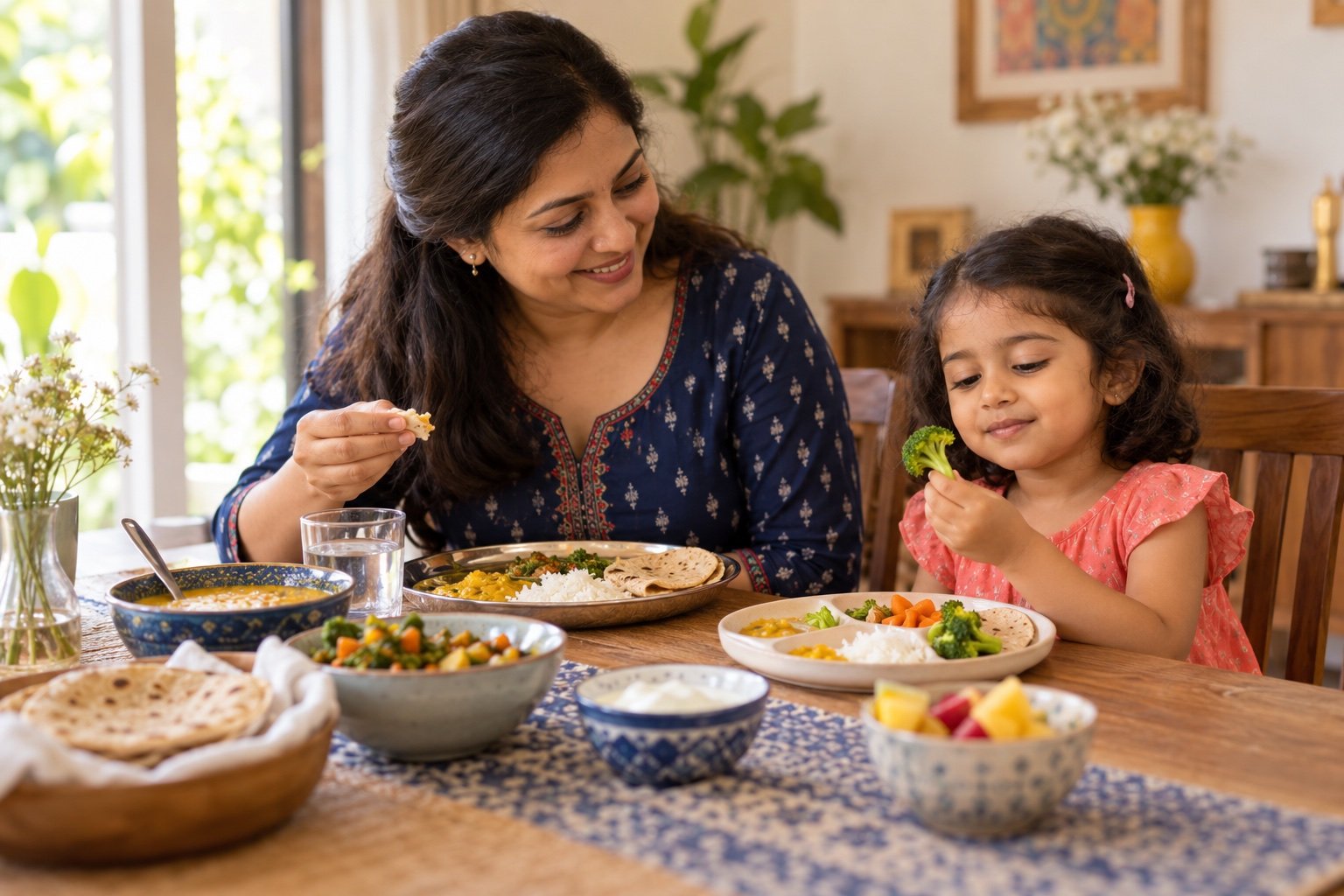
A preschooler may eat dal-rice happily one week and reject it the next. Appetite can vary with growth, activity, sleep, illness and snack timing. Many young children are cautious about unfamiliar tastes or textures. One refused vegetable—or one small dinner—does not describe the child’s overall nutrition.
The useful questions are broader: Is the child growing as expected? Active? Drinking enough? Eating foods from several groups across the week? Able to chew and swallow comfortably? Are meals calm enough for learning, or filled with fear and conflict?
Why preschoolers suddenly become selective
- Growth may slow compared with infancy, so appetite looks smaller.
- New independence makes “no” powerful.
- Smell, texture, temperature or food touching can feel important.
- Frequent grazing, milk or juice may reduce hunger at meals.
- Tiredness, constipation, illness or mouth pain can affect appetite.
- A negative feeding experience can make the table feel unsafe.
Calling the child “picky” at every meal can turn a temporary pattern into an identity. Describe the behaviour instead: “You are still learning this food.”
Build a low-pressure plate
Serve a child-sized portion of the family meal with one familiar item. The new or learning food can be tiny—a spoon of sabzi, one cucumber round or a separate dab of dal. More can be offered if wanted.
These are examples, not a prescribed diet. Adjust for allergies, cultural choices, medical advice, chewing ability and your family’s normal foods.
A seven-day mealtime reset
- Day 1—observe: write meal and snack times without commenting on quantity.
- Day 2—create rhythm: offer predictable meals and planned snacks rather than continuous grazing.
- Day 3—add one familiar food: stop cooking a completely separate surprise meal after refusal.
- Day 4—shrink the learning portion: make the new food less intimidating.
- Day 5—involve the child: wash a tomato, stir curd or carry spoons.
- Day 6—eat together: model tasting without watching every bite.
- Day 7—repeat: offer a previously refused food neutrally, with no demand to taste.
The goal is not to “fix” eating in seven days. It is to replace chaos with a routine that can support gradual learning.
Food exposure is more than swallowing
A child can progress from tolerating food on the table, to serving it, touching it, smelling it, licking it, biting and removing it, and eventually chewing and swallowing. Do not turn these stages into a public scorecard. Neutral exposure counts.
UNICEF India notes that a young child may need many encounters with a new food before accepting it. Offer variety repeatedly without force, and let the child see trusted adults eat it.
Use helpful, neutral language
- “You do not have to eat it. It can stay on the side.”
- “This carrot is crunchy; this one is soft.”
- “You can choose rice or roti from the table.”
- “Your tummy tells you when it has had enough.”
- “We will have another meal or snack later.”
Avoid “Just one bite for Mumma”, “No dessert until vegetables”, “Your friend eats everything” or “You will sit until the plate is clean.” Pressure may produce a bite today while increasing conflict tomorrow.
Check drinks and snack timing
Large drinks just before meals and frequent snacks can reduce appetite. Keep water available, follow your paediatrician’s advice for milk, and avoid using juice or sweet drinks to compensate for a refused meal. Do not withhold water or intentionally make a child excessively hungry.
Build enough time between planned eating opportunities for natural hunger to appear, while keeping the rhythm predictable. Children with medical conditions may need an individual plan.
Preschool lunch-box strategy
A school lunch is not the best place for several unfamiliar foods. Pack mostly reliable items plus one small learning food when appropriate. Use manageable portions and containers the child can open. Ask the teacher what was eaten without requesting pressure or public comparison.
Use the healthy preschool lunch-box guide for practical Indian combinations, but adapt it to the child’s current chewing and eating skills.
What often makes picky eating harder
- Cooking multiple replacement meals in front of the child after every refusal.
- Hiding all vegetables, so the child never learns their look or taste.
- Using sweets, screens or toys for each bite.
- Serving adult-sized portions.
- Commentating on every mouthful.
- Comparing the child with siblings or classmates.
- Forcing food into the mouth or restraining the child to eat.
Blending vegetables into a familiar recipe can add variety, but it should not be the only way a child encounters that food. Continue visible, pressure-free exposures when safe.
When picky eating needs professional help
Speak with a paediatrician or qualified dietitian when there is weight loss, poor growth, low energy, dehydration, persistent constipation, pain, frequent vomiting, suspected deficiency, or a food range that keeps narrowing and disrupts school or family life. Ask about feeding assessment when there is choking, coughing, gagging, pocketing food, difficulty chewing, very long meals or strong distress around textures.
Seek urgent care for breathing difficulty, blue colour, inability to swallow, signs of severe dehydration or a possible severe allergic reaction. Do not test a suspected allergy at home without medical guidance.
This article offers general education and cannot replace an individual nutrition, feeding or medical assessment.
Track the pattern, not every bite
For one week, note foods offered, foods accepted, drinks, meal length, discomfort, bowel pattern and school feedback. This gives a clinician more useful information than “eats nothing”. Keep the record neutral and do not show it as a score to the child.
Pair calmer meals with a reliable sleep schedule; exhaustion can affect appetite and tolerance for new experiences.
Quick parent FAQs
Is picky eating normal in preschoolers?
Selective phases are common. Growth, energy, nutrition, swallowing and distress matter more than one refused meal. Keep offering variety without force.
Should I force one bite?
Force, threats and rewards can increase conflict. Offer a small learning portion beside a familiar food, and let the child decide whether and how much to eat from what is served.
When should we seek medical help?
Ask for help with poor growth, weight loss, dehydration, pain, vomiting, choking, coughing, difficulty chewing or swallowing, extreme distress, nutritional concerns or a steadily shrinking food range.