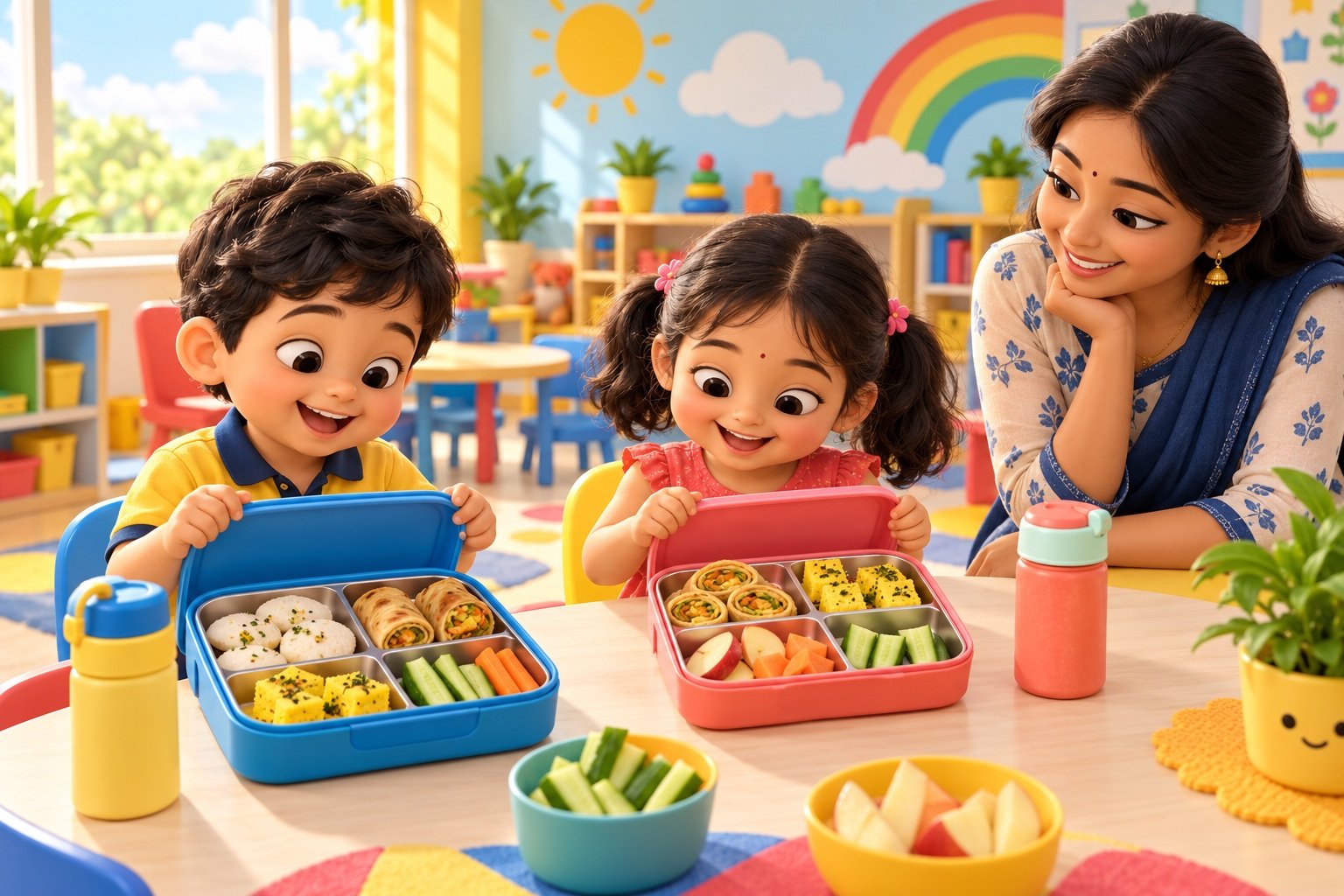
Preschool snack breaks are usually short, exciting and full of conversation. Children are more likely to manage a lunch box when the food is easy to hold, the portions look achievable and at least one item is already familiar. Think “small and balanced,” not “packed to the lid.”
The simple 3-part tiffin formula
- One satisfying main: idli, poha, paratha roll, cheela, dhokla, rice or another family staple.
- One colourful fruit or vegetable: prepared in an age-appropriate shape.
- One protein-rich partner: curd, paneer, dal, egg, beans or another food suitable for your family and school policy.
Add water in a bottle your child can open independently. FSSAI’s school-tiffin guidance encourages balanced boxes with fruit, vegetables and healthy cereals while limiting sugar-rich foods.
12 easy Indian preschool lunch-box combinations
1. Mini idli + mild vegetable podi + soft cucumber sticks
Use bite-sized idlis and keep seasoning mild. Pack the cucumber separately so the idli stays pleasant.
2. Vegetable poha + banana slices
Keep the poha soft rather than dry. Use familiar vegetables cut very small and a modest portion your child can finish.
3. Paneer paratha pinwheels + curd
Roll a soft paratha with a thin paneer filling and slice it into easy-to-hold spirals. Use an insulated container if curd needs to stay cool.
4. Besan cheela strips + apple slices
A soft cheela cut into short strips works well for little hands. Steam or grate firm fruit for a child who is not ready to manage slices safely.
5. Dhokla cubes + orange segments
Choose soft, mildly seasoned dhokla. Remove seeds and membranes that may be difficult for your child.
6. Vegetable uttapam wedges + plain curd
Make small uttapams with finely chopped toppings and cut them into wedges. Skip a runny chutney if it makes the box hard to manage.
7. Stuffed roti roll + melon slices
Fill a soft roti lightly with mashed potato, paneer or well-cooked vegetables. Avoid overfilling, which makes the roll fall apart.
8. Lemon rice + steamed vegetable pieces
Keep spice and salt light, and use a small spoon the child has practised with at home.
9. Moong dal cheela + soft pear
Cut the cheela into fingers. Choose ripe pear or prepare firmer fruit appropriately for your child’s chewing skills.
10. Mini vegetable sandwich + seasonal fruit
Use a soft filling such as mashed paneer, hummus or well-cooked vegetables. Check the preschool’s nut and allergy policy before using any nut-based spread.
11. Curd rice + grated carrot
Pack this only when you can keep it properly chilled until snack time. Ask the school how lunch boxes are stored.
12. Homemade vegetable appe + fruit
Small soft appe are easy to hold and can include finely grated vegetables. Cut them if their size is difficult for your child to bite safely.
A five-day sample lunch-box plan
For picky eaters: familiar + learning food
Pack one food your child usually accepts and add a very small amount of another food they are still learning to enjoy. Do not make finishing the new food the condition for praise or a reward. Repeated, pressure-free exposure can make a new food feel less unfamiliar.
- Let your child choose between two suitable fruits.
- Use small portions and allow a second helping at home if needed.
- Keep presentation simple; complicated shapes are optional.
- Ask what was easy or difficult to eat, not only why food came back.
Food-safety reminders for little children
- Follow your preschool’s allergy and food-storage policy.
- Use an insulated lunch bag and ice pack for foods that need to stay cold.
- Cut small round fruits such as grapes and cherry tomatoes into quarters lengthways; remove hard pips and stones.
- Avoid whole nuts, hard chunks and other foods your child cannot chew safely.
- Wash the lunch box and bottle daily, and do not repack perishable leftovers.
Every child’s chewing skills, allergies and nutrition needs are different. Ask your paediatrician or a qualified dietitian for personalised advice, especially if growth, restricted eating or food allergy is a concern.
A calm morning routine also helps children arrive ready to eat and participate. Pair these ideas with our preschool preparation plan and healthy screen-time routine.
Quick parent FAQs
What should I pack in a preschool lunch box?
Start with one familiar main food, one fruit or vegetable, one suitable protein-rich partner and water. Keep portions small and easy for your child to handle.
How do I keep a preschool lunch box safe?
Use a clean insulated lunch bag and ice pack for foods that need chilling, follow the school’s allergy and storage rules, and prepare foods in age-appropriate shapes.
What can I pack for a picky eater?
Pack at least one familiar accepted food beside a tiny portion of something newer. Avoid pressure and keep the overall box visually manageable.