Starting preschool changes a child’s social world. They spend longer indoors with other young children, touch the same blocks and books, and are still learning not to rub their eyes or put fingers near their mouth. One child may be contagious before a family knows they are unwell. That makes preschool a very different exposure setting from home.
This does not automatically mean your child has “weak immunity” or that the school is unclean. The NHS says children average around five to eight colds a year. The American Academy of Pediatrics (AAP) notes that children can experience many infections in their first year of group child care, with respiratory illnesses usually beginning to fall in the second year.
Why one illness seems to follow another
Many different viruses cause similar symptoms
A cold is not one single germ. Hundreds of viruses can cause a runny nose, cough or sore throat. Recovering from one does not protect a child from every other virus circulating in the classroom.
Symptoms can overlap
A young child’s cough may continue after the fever has settled. If a new infection starts before the old cough fully disappears, it can feel like one illness lasting for weeks. Keep notes rather than guessing whether symptoms are new or continuing.
Preschool habits make spread easy
Young children play close together and share materials. They may wipe a nose, touch a toy and then touch their face. These are normal developmental habits that educators patiently teach over time.
Season and local outbreaks matter
Respiratory illnesses may rise when children return after a break or spend more time indoors. Stomach bugs, hand-foot-and-mouth disease, conjunctivitis and other infections can also circulate. Follow local medical advice and the school’s current policy rather than a forwarded message.
What actually helps reduce spread
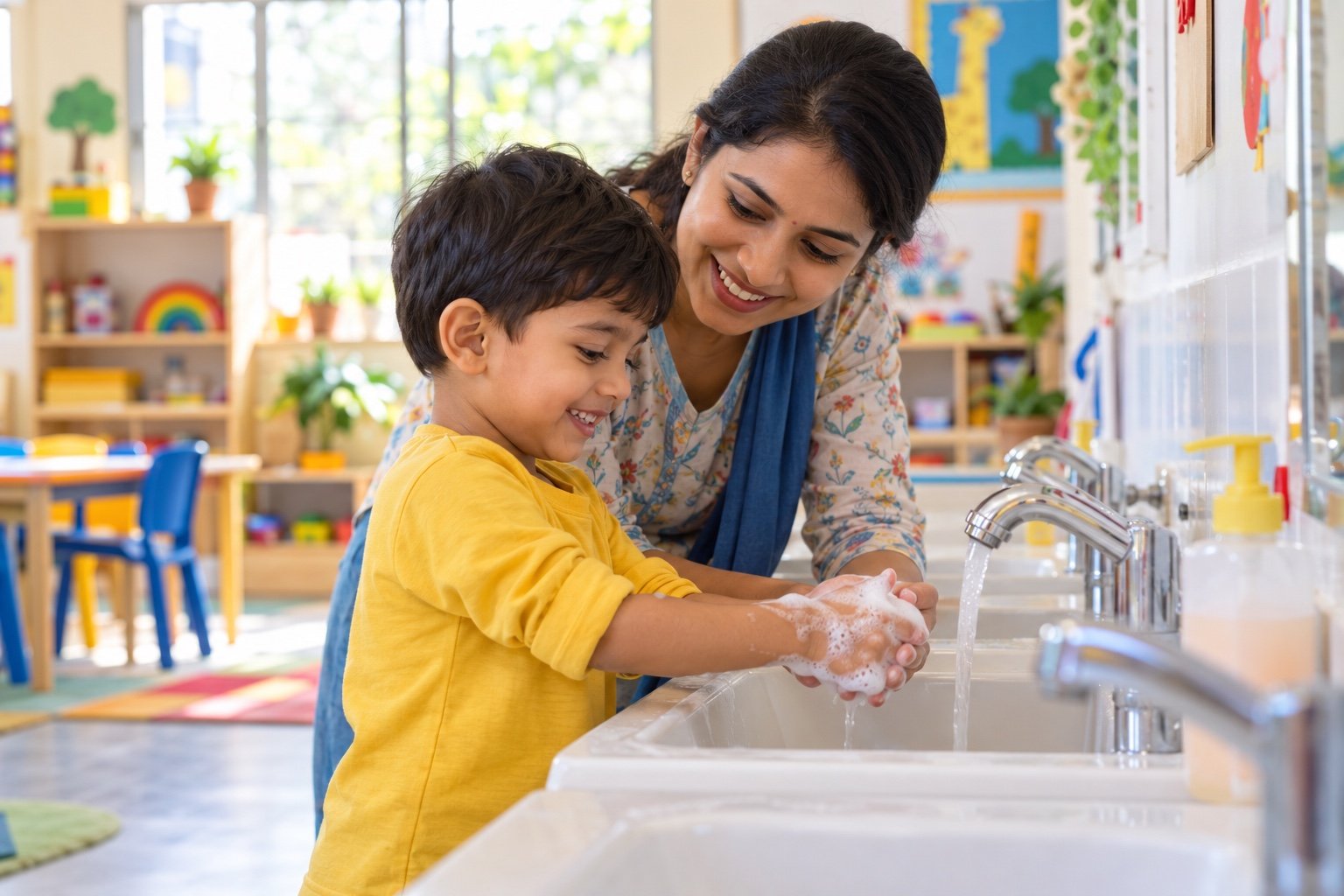
- Teach handwashing as a routine: use soap and water after the toilet, before eating, after outdoor play and after blowing the nose. A short song can help children wash long enough.
- Practise respiratory etiquette: cough or sneeze into a tissue or elbow, bin the tissue and wash hands. Practise when the child is well.
- Keep vaccinations current: discuss the Indian Academy of Pediatrics or government-recommended schedule with your paediatrician, including any seasonal advice relevant to your child.
- Use personal bottles and utensils: label them clearly and remind children not to swap.
- Protect sleep and recovery: a tired child may struggle through the school day. Keep routines gentle and allow proper rest after illness.
- Share useful information: tell the school about a diagnosed contagious illness and keep emergency contacts updated.
CDC guidance says hand hygiene programmes in early-care settings can reduce respiratory and stomach illness and missed days. These habits lower risk; they do not create a germ-free childhood.
What does not need to become a daily battle
- Do not blame the child for becoming ill or describe them as “delicate”.
- Do not demand antibiotics for every cough or cold; antibiotics do not treat viral infections.
- Do not start repeated supplements or “immunity boosters” without discussing ingredients, dose and need with a qualified clinician.
- Do not send a clearly unwell child only because an important activity is scheduled.
- Do not disinfect every toy at home constantly; focus on sensible hand, food and surface hygiene.
Should my child go to preschool today?
Policies vary by illness and local public-health advice. AAP guidance focuses on whether a child can participate comfortably, requires more care than staff can provide, or may pose a meaningful risk to others. Ask Taxway Kiddoo for the current illness policy during your school visit.
When to call the paediatrician
Arrange medical advice when symptoms are worsening rather than improving, fever is persistent or repeatedly returns, the child has ear pain, wheezing, significant sore throat, repeated vomiting or diarrhoea, a concerning rash, very low energy, poor fluid intake, fewer wet trips to the toilet, or you simply feel something is not right.
Seek urgent care for difficult or fast breathing, blue or grey lips, severe dehydration, unusual drowsiness or inability to wake normally, a seizure, stiff neck, sudden severe pain, or a rapidly spreading concerning rash. Follow local emergency services and your paediatrician’s advice.
Also discuss a fuller assessment if infections are unusually severe, repeatedly need hospital care, do not clear as expected, are accompanied by poor weight gain, or the child is not fully well between episodes. This article is general education and cannot diagnose an infection or immune condition.
Make a simple illness record
Instead of relying on memory, note the start date, temperature, main symptoms, medicines advised, days absent and recovery date. Add any diagnosis and whether other family members were ill. This helps a paediatrician see patterns and helps parents separate one long cough from several distinct illnesses.
Keep the return to school low-pressure. Re-establish bedtime, pack water and a familiar snack, and tell the teacher if energy is not fully back. If absence has made drop-off difficult, use the short routine in our preschool separation-anxiety guide.
Quick parent FAQs
Is it normal to get sick often after starting preschool?
Frequent mild infections are common in the first year of group care because children meet many new viruses. The pattern often improves as time in group care continues, but severe or worrying symptoms still need medical advice.
Can hygiene prevent every preschool illness?
No. Handwashing, cough etiquette, vaccination and sensible stay-home decisions reduce spread but cannot remove all risk. The goal is practical prevention, not a germ-free classroom.
When should I worry about frequent illness?
Speak with a paediatrician for unusually severe or slow-to-clear infections, poor growth, repeated hospital treatment, incomplete recovery between episodes or any parent concern. Breathing difficulty, severe dehydration, seizures or unusual unresponsiveness need urgent care.