
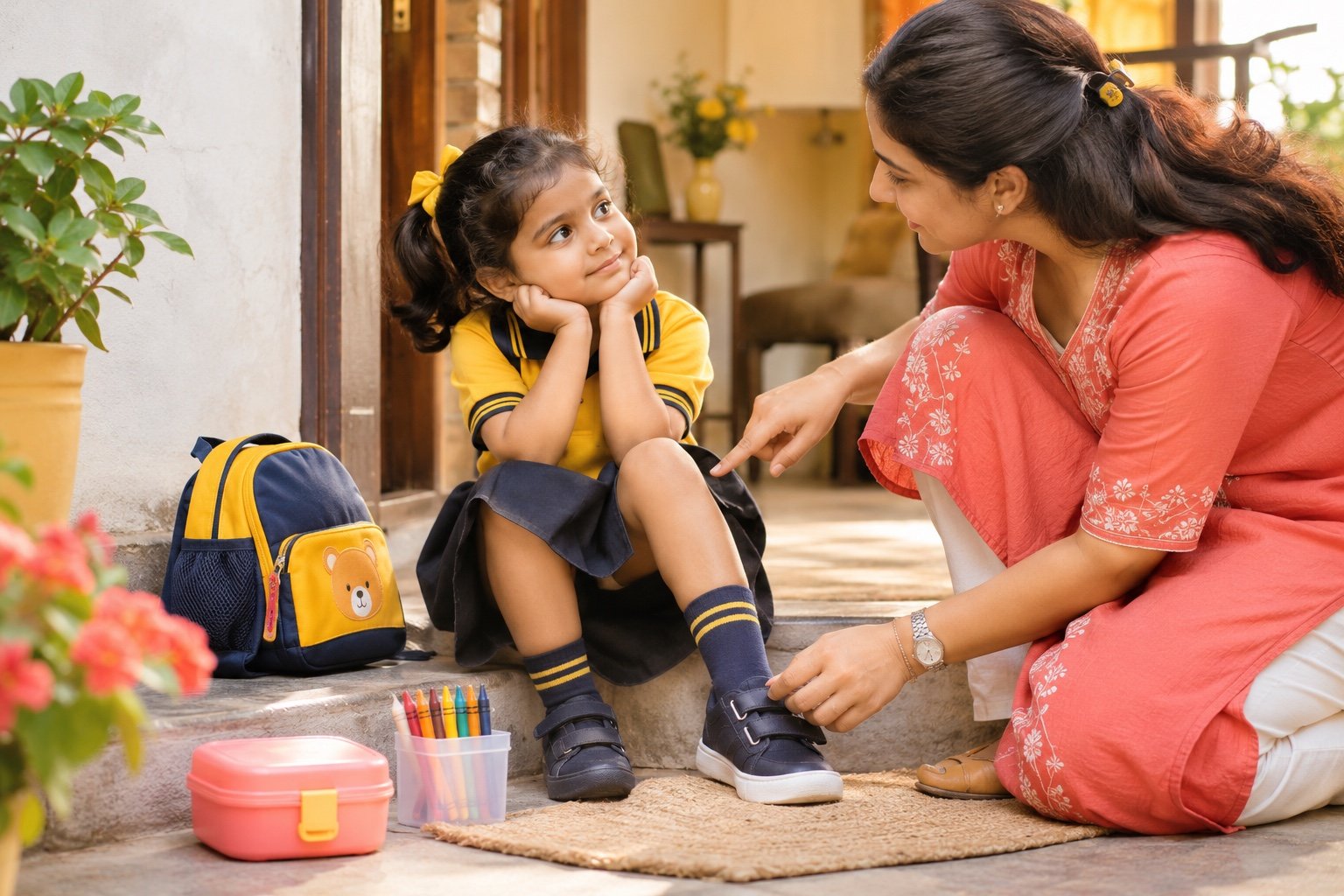
Returning to preschool can feel like a second first day. During a break, bedtime shifts, mornings slow down and a child gets used to having a parent nearby. After illness, the body may be better while confidence is still low. A changed teacher, friend, transport route or classroom activity can add another layer. Refusal does not automatically mean the school is wrong or the child is being naughty.
Start with two goals at the same time: understand what the child is communicating and restore a safe, dependable routine. You do not have to choose between empathy and attendance. A calm adult can say, “I know returning feels hard, and I will help you go.”
Restart nerves or a bigger problem?
Some resistance is common after holidays and other breaks. A child may ask for one more hug, cry at the gate and then settle into play. Improvement over several consistent mornings is reassuring. A more concerning pattern includes intense fear, repeated physical complaints only on school days, distress that lasts through the day, panic, sleep disruption or refusal that keeps growing.
Do not diagnose from one difficult Monday. Ask the teacher how the child behaves after handover: Do they recover within minutes? Join an activity? Eat and use the toilet? The answer helps separate a hard goodbye from distress that continues inside the classroom.
First check health and safety
Take fever, vomiting, breathing difficulty, significant pain and ongoing diarrhoea seriously. Follow the preschool’s illness policy and ask your paediatrician when symptoms need assessment. Even when a stomach ache appears linked to anxiety, the discomfort can feel real; avoid saying, “You are making it up.”
Listen calmly if your child mentions hitting, frightening behaviour, toileting embarrassment, being left alone or an unsafe touch. Use open prompts—“Tell me more about that”—without leading questions or promises you cannot keep. Share a specific safety concern promptly with the school and an appropriate health or child-protection professional.
Find the return trigger
- Routine shift: later sleep, screen-heavy evenings or slow holiday mornings make the school timetable feel abrupt.
- Separation reset: several days with family can bring back clinginess even in a previously settled child.
- Post-illness uncertainty: the child may fear feeling sick at school or worry that a parent will not come quickly.
- Classroom change: a new seat, teacher, group, activity or absent friend may matter more than adults expect.
- Body needs: hunger, constipation, a toilet worry, uncomfortable uniform or noisy transport can appear as “I hate school”.
- Skill pressure: the child may be avoiding a task that feels difficult, such as speaking in a group, writing, eating independently or joining play.
Ask at a neutral time, not during the rushed drop-off. Try, “What is the hardest part—getting ready, saying goodbye or something in class?” Drawing the school day or playing with toy figures may reveal more than repeated direct questioning.
A five-day return-to-preschool plan
Day 1: reconnect before the morning
Message the teacher and share the change you have noticed. Confirm who will welcome your child and the first enjoyable activity. Look at one school photo, pack the bag together and return to the usual bedtime. Keep the conversation short and confident.
Day 2: make the sequence visible
Use three or four pictures: wake up, breakfast, clothes, school. Give one direction at a time and build a ten-minute buffer. Too many reminders can increase alarm. If sleep has drifted, move it gradually using our preschool sleep routine guide.
Day 3: use a brief handover
Agree on one goodbye: hug, phrase, wave and leave with the designated adult. Re-entering repeatedly teaches the child that louder distress brings the goodbye back. The teacher can offer a small job—carry the register, water a plant or choose the first book—to create an immediate next step.
Day 4: notice recovery, not perfect feelings
Say, “You felt worried and you went inside with Ma’am.” Praise brave participation instead of demanding that the child stop crying. Ask the teacher when the child settled and what helped, then repeat that support.
Day 5: review the pattern
Compare the week: Is getting ready faster? Is crying shorter? Is eating or sleep improving? Keep what works. If distress stays intense or new details emerge, arrange a focused meeting with the teacher rather than changing the routine every day.
Morning scripts that reduce debate
Use a time marker your child understands—after lunch or after story time—rather than “at 12:30”. Never secretly disappear. A predictable goodbye builds trust even when it brings tears.
What not to do
- Do not shame: “Only babies cry” or “Everyone is watching you”.
- Do not threaten abandonment or use the teacher as punishment.
- Do not physically drag the child when there may be a health or safety concern.
- Do not turn every home absence into unlimited screens, treats and outings; keep the day calm and school-like when the child is well enough.
- Do not ask twenty anxious questions after pickup. Begin with connection, food and rest.
- Do not promise “nothing bad will happen”. Promise what you control: adults will listen, help and return.
Build a school–home bridge
Ask the preschool for a consistent receiving adult, a peer buddy and a familiar opening task. Share the exact goodbye words you use. A small family photo or comfort object may help if school policy allows. Keep updates brief—one message after settling is often enough—so the family and teacher can focus on the same plan.
If the issue is mainly the goodbye, use the step-by-step ideas in our preschool separation anxiety guide. If the whole morning becomes a struggle, our calm directions guide can simplify getting ready.
When to ask for professional help
Speak with a paediatrician or qualified child mental health professional when physical symptoms persist, fear is severe, the child cannot attend regularly, distress continues through the school day, sleep or eating changes significantly, the child loses skills, or the pattern affects family life for more than a short adjustment. Seek help sooner for any safety concern.
The aim is not to eliminate every worried feeling before the child returns. It is to make returning safe, supported and manageable. Early teamwork between family, school and health professionals can prevent avoidance from becoming more established.
Quick parent FAQs
Why does my child suddenly refuse preschool after holidays?
A break can interrupt sleep, separation and morning routines. Also check for classroom, friendship, toilet, transport, health or skill-related worries while rebuilding a predictable routine.
Should I force my crying child to go to preschool?
Avoid threats, shame or dragging. Check illness and safety first, then use a calm, brief handover with school support. Seek professional advice if distress is intense, persistent or disrupts daily life.
How long does it take to settle back into preschool?
There is no fixed number of days. Look for shorter distress and better recovery after drop-off. Ask for help when symptoms persist, worsen or significantly affect sleep, eating, health or attendance.