“Does my child have to be toilet trained for preschool?” is a common admission-season question. The honest answer is that policies vary. A playgroup may accept nappies and provide changing support, while another nursery may expect basic daytime independence. Ask the school exactly what it means by “toilet trained” before setting a stressful deadline.
What preschool toilet independence can include
It is not only staying dry. A preschool routine may involve noticing the body signal, telling an adult, reaching the toilet, managing clothing, sitting safely, wiping with the level of help the school provides, flushing and washing hands. These are several separate skills, so teach and practise them one at a time.
First, ask the preschool these seven questions
- Must children be out of nappies or pull-ups for this programme?
- What help can staff provide with clothing, wiping and handwashing?
- Are children reminded to use the toilet at routine times?
- What words or signs do teachers use for toilet needs?
- How are accidents handled and communicated?
- How many spare clothing sets should families send?
- Are the toilets child-sized, or are seats and step stools available?
Share the child’s current ability without embarrassment. The teacher needs accurate information to offer safe and consistent support.
Prepare the environment at home
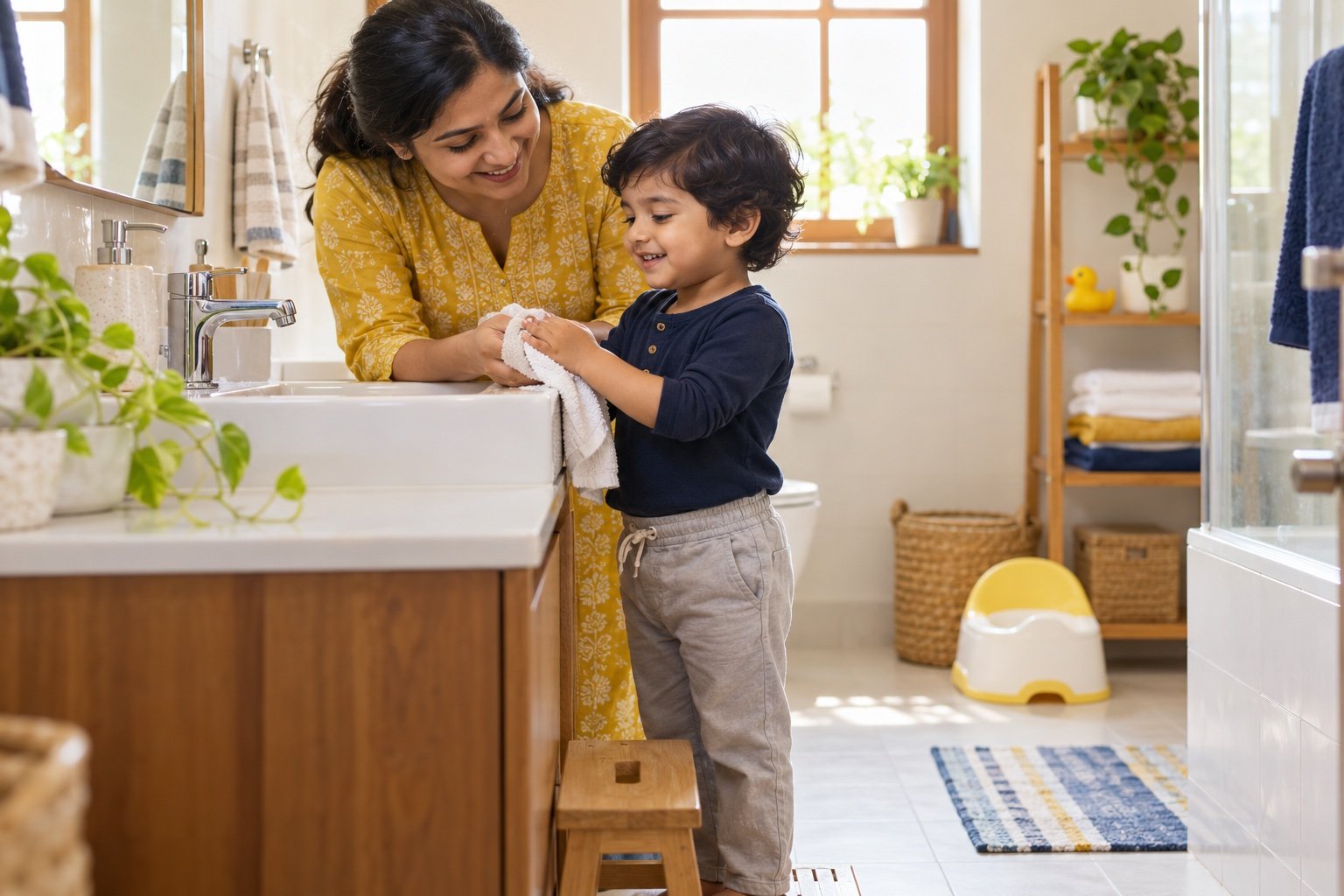
- Use a stable potty or a secure toilet seat with a step so the child’s feet are supported.
- Choose elastic-waist trousers or leggings that are easy to pull down and up.
- Keep the route clear and the bathroom light easy to reach with adult supervision.
- Use the same simple words for wee, poo, toilet and help.
- Keep clean clothing and a wet-clothes bag ready without presenting them as punishment.
The American Academy of Pediatrics notes that thinking, memory, language and problem-solving all support toilet learning. A child may manage one part before another, especially in a distracting new environment.
A gentle seven-day preschool practice plan
This is a preparation plan, not a promise that training finishes in seven days. Repeat the steps your child needs and keep the mood ordinary.
Use routine prompts, not constant questioning
Offer a calm toilet opportunity after waking, around meals, before leaving home and before bed, adjusted to your child’s pattern. Avoid asking “Do you need to go?” every few minutes. Children may automatically say no when deeply engaged in play.
Notice useful body cues without shame: pausing suddenly, fidgeting, hiding, holding or changing posture. Say, “Your body may be telling you it needs the toilet. Let’s check.”
How to respond to an accident
- Keep your face and voice neutral: “Your clothes are wet. Let’s get comfortable.”
- Help the child finish in the bathroom if needed.
- Involve them in one manageable step, such as placing clothes in the wet bag.
- Change, wash hands and return to play without a lecture.
- Notice the pattern later: timing, constipation, fear, unfamiliar toilet or clothing difficulty.
HealthyChildren.org explains that accidents may continue for months after learning appears complete, including at age three or four. What matters is whether they gradually reduce and whether there are signs of pain or another concern.
What to pack for preschool
- Two complete labelled clothing changes when the school requests them.
- Extra underwear and socks.
- Easy-pull bottoms without difficult belts, buttons or dungaree straps.
- A waterproof, labelled pouch for wet clothing.
- Any nappy or wipe supplies specifically approved by the school.
Never place medicine or creams in the bag without following the school’s written health procedure. See our complete preschool school-bag checklist.
Watch for constipation and toilet fear
Constipation can make poo painful, which can lead a child to hold it in and become more worried about toilets. The NHS advises seeking medical help when constipation is suspected; signs can include hard or pellet-like stools, straining, pain, bleeding, poor appetite or tummy pain that improves after pooing. Do not give medicines or laxatives without appropriate medical advice.
A child may also fear a loud flush, a large seat, a closed cubicle or an unfamiliar bathroom. Practise with stories and pretend play, ask what feels scary and tell the teacher. Never force a frightened child to sit.
When to speak with a paediatrician
Seek professional advice when the child has pain, blood, suspected constipation, repeated urinary symptoms, sudden regression after being consistently dry, frequent accidents that are not improving, unusual thirst or urination, or any concern about development. Night-time dryness follows a different timeline and should not be used as the preschool-readiness test.
For the wider transition, use our preschool readiness checklist and calm drop-off guide.
Quick parent FAQs
Must a child be fully toilet trained before preschool?
Policies differ by preschool and age group. Ask exactly what independence the school expects and what help staff can provide. Share your child’s current routine honestly.
Are toilet accidents at preschool normal?
Accidents can happen while a child is learning or adapting. Respond calmly and discuss patterns with the teacher. Seek medical advice if accidents are frequent, worsening, painful or accompanied by constipation or other symptoms.
What should I pack while my child is still learning?
Follow the school policy. Common items include two complete labelled clothing changes, extra underwear, easy-pull bottoms, socks and a waterproof wet-clothes pouch.