
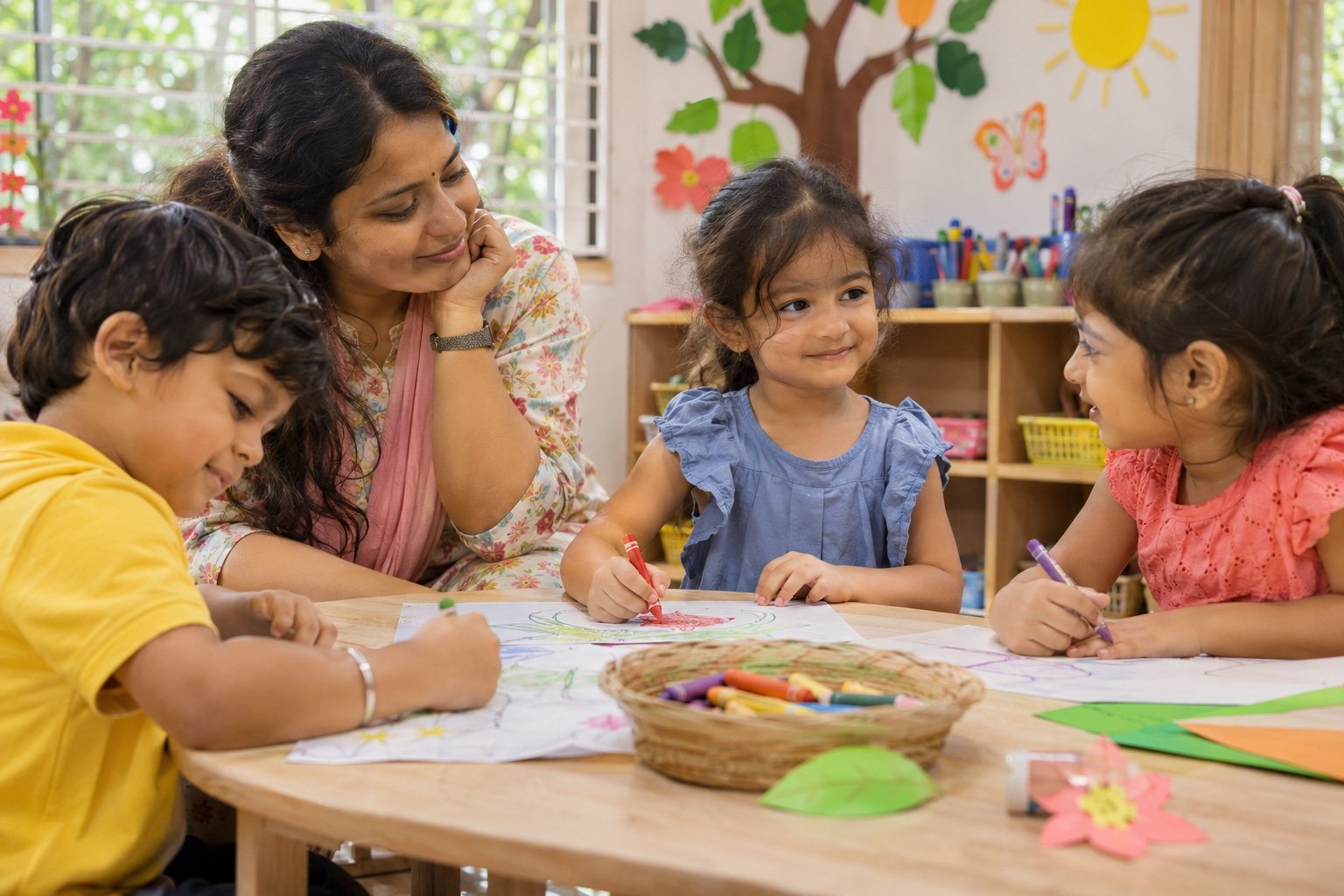
A quiet preschooler may hide behind a parent, speak softly to unfamiliar adults or spend the first part of class observing. This can be a normal slow-to-warm temperament. HealthyChildren, from the American Academy of Pediatrics, notes that not everyone is an extrovert and many shy children do well socially once they have had time to adjust.
The useful question is not “How do we make this child outgoing?” It is “Can the child communicate needs, form comfortable relationships and gradually participate without overwhelming fear?” Respect the personality while expanding confidence.
Shyness, settling and anxiety are not identical
A slow-to-warm child may stay close at first, observe, then join familiar activities. Separation difficulty is focused on leaving a caregiver. Anxiety may be broader and stronger: intense fear, repeated physical symptoms or avoidance that significantly limits ordinary life.
Do not diagnose from one birthday party, stage event or school morning. Look for patterns across time, people and places. Ask what happens after the child has warmed up—not only during the first five minutes.
What can make a quiet child withdraw more?
- Being introduced repeatedly as “the shy one”.
- Forced greetings, hugs, performances or answers in front of a group.
- Adults answering every question before the child has time.
- Comparisons with a confident sibling or classmate.
- Arriving rushed, late or without time to observe the room.
- Large, noisy activities without a quieter entry point.
- Praise that adds pressure: “See, that was easy—why were you scared?”
UNICEF guidance for adults supporting shy children recommends gradual inclusion, no criticism or comparison, and highlighting progress over time.
Build a confidence ladder—not a leap
Choose one real situation and write the smallest steps from easiest to harder. Repeat a step until it feels ordinary; do not race to the top.
The ladder belongs to the child’s real starting point. For one child, saying hello is a brave step. For another, it may be joining a group game for two minutes.
Practise social scripts through play
Role-play with puppets or dolls: arriving at school, asking to join blocks, requesting help and saying goodbye. Keep the script short enough to remember:
- “Can I play too?”
- “Can I have the blue crayon?”
- “Please help me.”
- “I want to watch first.”
- “No thank you.”
Accept gestures while language grows. A child can point, hold up a turn card or stand beside an activity before speaking. Participation has more than one valid form.
Use child-led play to grow real confidence
CDC’s 2026 guidance says child-led play can build independence, confidence and connection. Set aside five to fifteen minutes where the child chooses the safe activity. Imitate, describe and reflect rather than correcting every choice or asking a stream of questions.
For example: “You chose the green block. You are balancing it carefully.” This gives the child experience of being competent and heard. Confidence built in comfortable play becomes a foundation for harder social moments.
A five-day gentle practice plan
- Day 1: identify one situation the child wants to feel easier about.
- Day 2: role-play the first small step with toys.
- Day 3: practise with a trusted relative or familiar child.
- Day 4: visit the setting or look at a classroom photo and rehearse the phrase.
- Day 5: try the step, then celebrate effort privately without demanding a bigger performance.
Repeat the same plan if needed. Confidence is not a weekly target sheet; it grows through safe, successful repetitions.
How the preschool teacher can help
- Greet the child warmly without requiring an immediate verbal reply.
- Offer a useful classroom job such as carrying crayons or choosing a story.
- Begin with one calm, compatible play partner.
- Allow observation before joining a group activity.
- Ask questions that can be answered by pointing or choosing.
- Share specific progress with parents: “She passed a brush to Meera” rather than “She was fine”.
Agree on one confidence step at a time. If school entry itself is the main difficulty, use our calm drop-off plan alongside the ladder.
What to say after a brave moment
Keep feedback warm and specific: “You looked at your friend and asked for the crayon”, “You stayed for the whole song” or “You told the teacher you needed help”. Avoid turning the achievement into a public announcement if attention embarrasses the child.
Also value quiet strengths: careful observation, thoughtful ideas, gentle play, listening and persistence. Confidence is not measured only by loudness.
Support friendships without arranging every interaction
Start with one familiar child and a structured activity that reduces conversational pressure: building blocks, drawing, watering plants or dough play. Keep the first meet-up short. Stay nearby but allow the children time to solve ordinary pauses.
If turn-taking is the barrier, use the games and scripts in our sharing and turn-taking guide.
When to seek additional support
Discuss concerns with the teacher and paediatrician when fear is intense or worsening, continues even in familiar settings, prevents speaking or participating for a long period, causes frequent stomach aches or other distress around social situations, or significantly affects friendships, learning or family life.
Seek advice promptly for a sudden loss of social or language skills. A professional can consider hearing, communication, anxiety, development and the environment. Quiet temperament alone does not need to be “fixed”, but a child whose fear limits daily life deserves support.
Quick parent FAQs
Is it normal for a preschool child to be shy?
Yes. Some children need more observation time before joining. Look at whether the child gradually warms up, communicates needs and forms comfortable relationships—not whether they are naturally loud.
How can I help my shy child participate?
Avoid labels and forced performance. Practise one small social step, arrive with settling time, coordinate a low-pressure classroom job and praise the specific brave action privately.
When does shyness need extra support?
Ask for advice when fear is intense, persistent across familiar settings, causes physical distress, prevents communication or participation, limits learning and friendships, or follows a sudden loss of skills.