Speech, language and communication are related but different. Speech is how sounds and words are produced. Language includes understanding and using words, sentences and stories. Communication also includes eye contact, gestures, facial expressions, turn-taking and the reason a child communicates.
A child can pronounce some sounds unclearly yet communicate effectively. Another child may say clear words but find it difficult to understand questions or hold a back-and-forth exchange. That is why one vocabulary number cannot describe the whole picture.
Current CDC communication milestones at age three
By the end of three years, the CDC’s updated checklist asks whether a child:
- talks in a conversation with at least two back-and-forth exchanges;
- asks “who”, “what”, “where” or “why” questions;
- says what action is happening in a picture, such as running or eating;
- says their first name when asked; and
- talks well enough for other people to understand most of the time.
These are broad developmental signposts. A child may demonstrate a skill in play but not when directly questioned. Observe across familiar people, routines and languages over more than one day.
What everyday communication may sound like
Grammar and sound production are still developing. Do not demand perfect sentences or perfect pronunciation. Listen for growth in meaning, understanding and connection.
Multilingual homes: count every language
Hindi, English, Rajasthani and other home languages are all part of the child’s communication system. Mixing words from different languages in one sentence can be a normal part of multilingual development. ASHA recommends talking to children in the languages adults are most comfortable using.
Do not reduce warm family conversation to one less-comfortable language because someone says two languages will “confuse” the child. If there is a genuine language difficulty, it may appear across languages, and assessment should consider the child’s full language experience.
Seven play-based ways to support language
1. Follow the child’s focus
Talk about the toy, action or picture your child is already watching. Shared attention makes words more meaningful.
2. Add one small step
If the child says “car”, reply “blue car” or “car is going”. This models language without demanding repetition.
3. Pause after speaking
Count silently for a few seconds. Children often need more processing time than adults expect.
4. Offer useful choices
“Apple or banana?” gives the child words to hear and a real reason to respond. Accept pointing while modelling the word.
5. Read the same book again
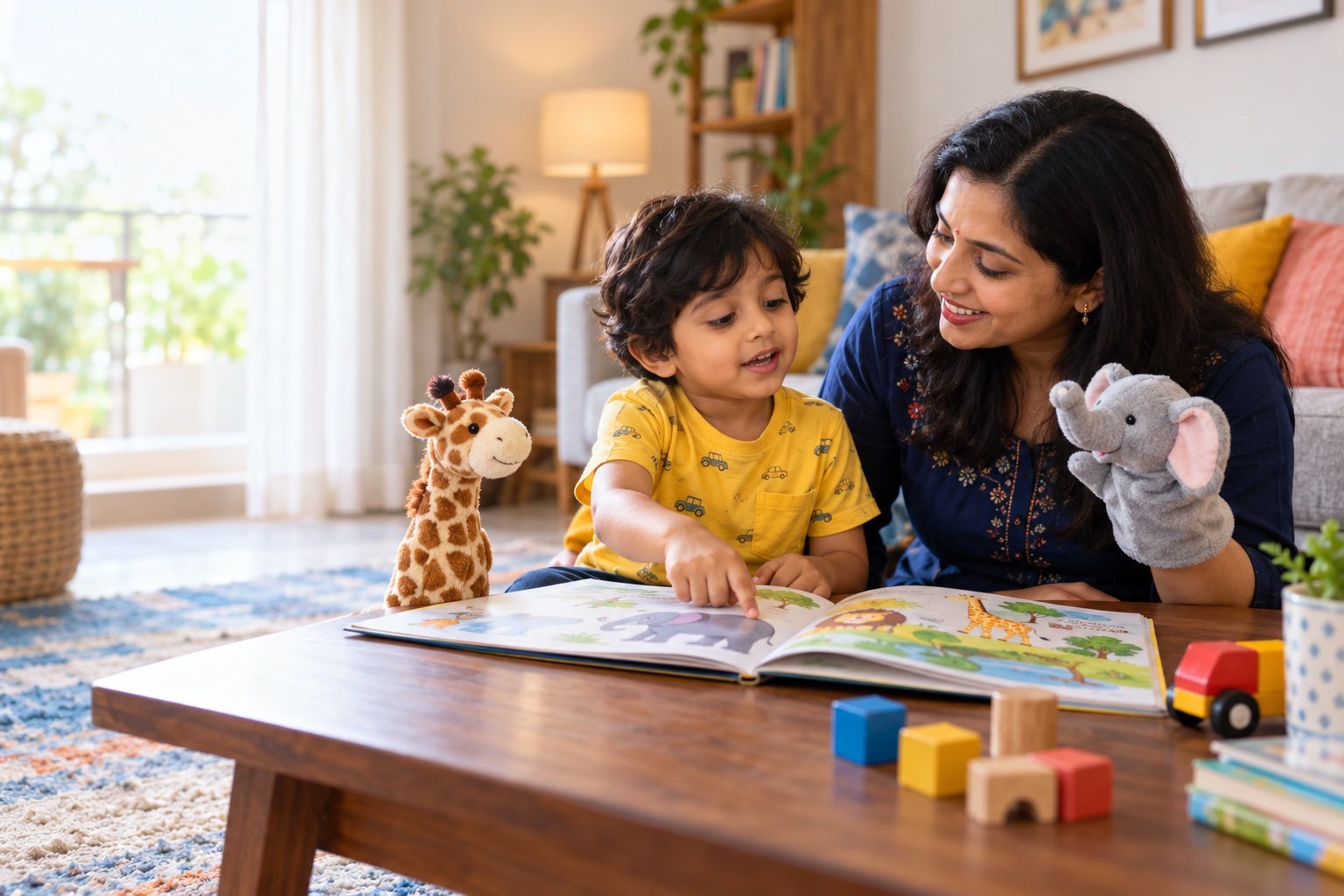
Repetition builds confidence. Comment on pictures, ask one genuine question and let the child turn pages or retell a familiar part.
6. Use pretend play
Act out cooking, visiting a doctor or taking a bus. Pretend play naturally creates verbs, questions, sequences and social language.
7. Sing and rhyme
Pause before a familiar final word so the child can gesture, vocalise or complete it. Keep the activity playful.
Helpful responses when speech is unclear
- Move closer, reduce background noise and watch the child’s gesture.
- Repeat what you understood: “You want the blue…?”
- Offer two possibilities instead of saying “I can’t understand” repeatedly.
- Model the word naturally rather than making the child say it many times.
- Protect the child from teasing and help siblings wait for their turn.
Avoid pretending to understand when safety or an important need is involved. Stay respectful and use pictures, gestures or showing as additional communication.
What not to rely on
- “Boys always talk late.”
- “A relative spoke late and became fine, so we should wait.”
- Apps or videos as a replacement for interaction.
- Comparing only with one sibling or classmate.
- Drilling flashcards for long sessions.
- Assuming pronunciation is the only issue without checking understanding and hearing.
Early support does not label a child. An assessment can clarify strengths, hearing, understanding, speech sounds and the next useful step.
When to speak with a professional
Contact your child’s paediatrician and ask about hearing and speech-language assessment if your child loses words or other skills, rarely responds to sounds or name, has difficulty understanding familiar language, is not combining words into useful phrases, is rarely understood even by familiar adults, does not use gestures to compensate, or struggles to communicate needs across settings.
India’s Rashtriya Bal Swasthya Karyakram materials identify three-word sentences by three years as an important signpost and note that significant speech delay warrants hearing assessment. Do not wait for a school admission problem before raising a concern.
Seek urgent medical care for a sudden loss of speech with weakness, altered awareness, breathing difficulty, head injury or another acute emergency. This article cannot diagnose speech, language, hearing, autism or another developmental condition.
Prepare useful notes for the appointment
- Write examples of what your child understands and says in every language.
- Note how the child requests, comments, plays and responds to sound.
- Ask the preschool teacher what they observe in groups and one-to-one play.
- Bring the CDC checklist and mention any loss of skills.
- List relevant ear infections, hearing concerns and family history.
Continue reading, singing and playful sound activities, but do not use home activities as a reason to delay an assessment when there is concern.
Quick parent FAQs
How much should a 3-year-old talk?
A word count alone is not enough. Look for back-and-forth conversation, questions, naming actions, a first name and speech that others understand most of the time, alongside understanding, gestures and play.
Does speaking two languages cause speech delay?
Using more than one language does not itself cause a language disorder. Count communication across every language and keep speaking the languages your family uses comfortably.
When should parents seek help?
Act promptly for lost skills, poor response to sound, difficulty understanding language, lack of useful word combinations, very unclear speech or any ongoing parent or teacher concern. Ask about hearing and speech-language assessment.