
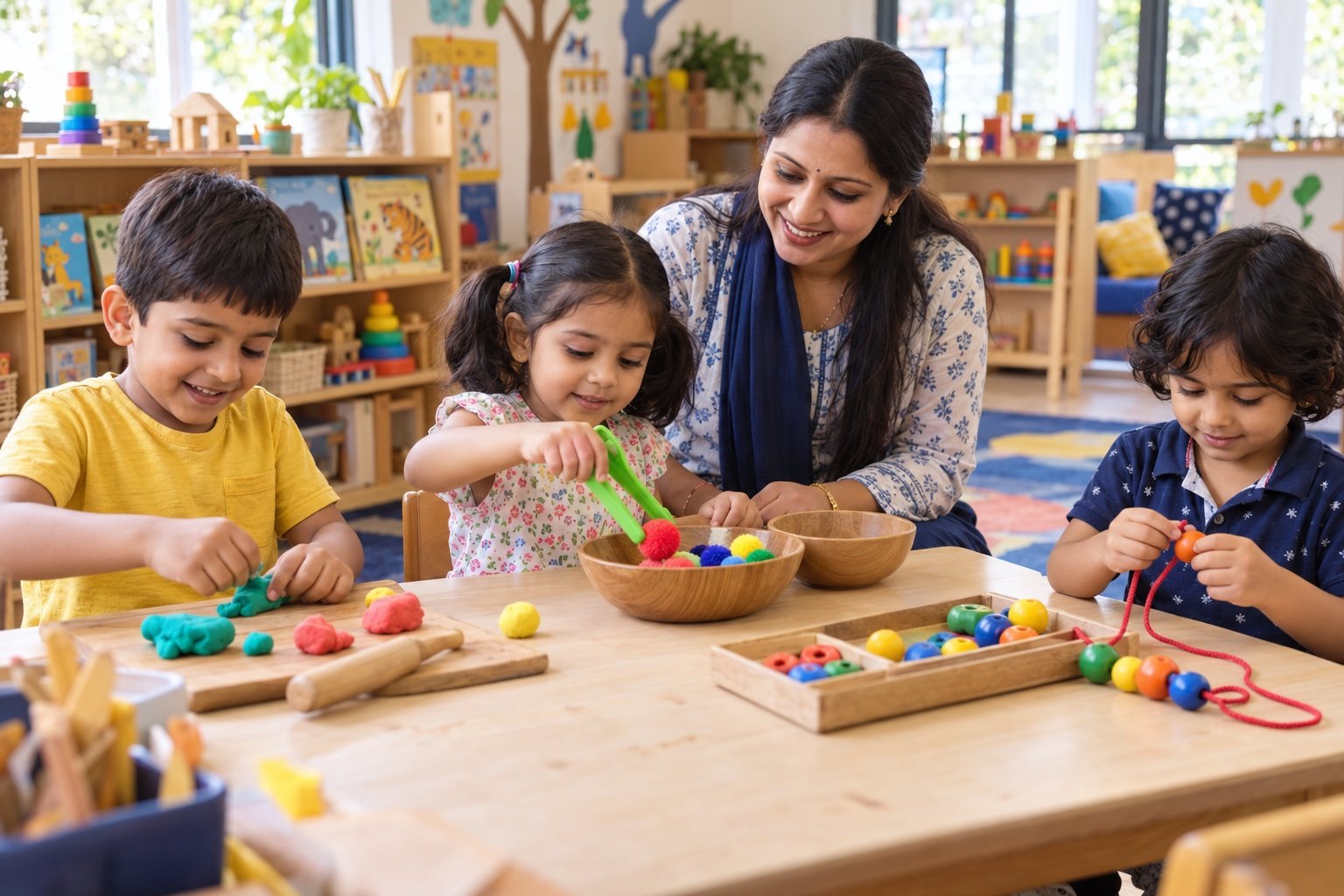
Fine motor skills are the small, controlled movements of the hands and fingers. Children use them when they turn a book page, feed themselves, open a lunch box, pull a zip, build with blocks, draw and eventually write. These skills develop gradually through everyday play—not through pressure to hold a pencil perfectly.
What to notice before you begin
Choose an activity that is achievable but still interesting. Watch whether your child uses both hands together, changes hands often, grips too tightly or becomes tired. Offer a demonstration, then let the child experiment. Five joyful minutes can be more valuable than twenty frustrated minutes.
12 playful fine motor activities
1. Play-dough pinch and roll
Roll snakes, press thumbprints, pinch tiny “chapatis,” hide large safe objects inside and rescue them. Squeezing and pinching build hand strength and finger control.
2. Tong transfer game
Use child-safe kitchen tongs to move large pom-poms, cotton balls or blocks between two bowls. Begin with a wide bowl and larger items before making the challenge smaller.
3. Large-bead threading
Thread large wooden beads, pasta tubes or cotton reels onto a stiff cord or pipe cleaner. Always supervise and choose pieces too large to be a choking risk.
4. Peg the laundry
Clip clothes pegs around the edge of a box, hang doll clothes or match coloured pegs to cards. Pressing a peg works the thumb and fingertips together.
5. Tear-and-paste collage
Tear coloured paper into strips and small pieces, then glue them into a rainbow, tree or favourite animal. Tearing asks the two hands to do different jobs at the same time.
6. Sticker pathways
Draw a curvy road and let your child peel and place stickers along it. Start with larger stickers and fold a tiny corner of the backing if peeling is difficult.
7. Sponge squeeze station
Move water from one bowl to another by soaking and squeezing a clean sponge. Do it on a balcony, bathroom floor or tray where spills are welcome.
8. Posting box
Cut a safe slot into a sturdy box and post large cards, craft sticks or lids. Avoid coins or small objects with children who still put things in their mouths.
9. Build and balance
Stack wooden blocks, connect large construction pieces or copy a simple three-block model. Rotate pieces rather than correcting every attempt.
10. Kitchen helper jobs
Let your child peel a banana, knead dough, use a cookie cutter, shell peas or tear soft leaves. Real household work adds purpose to hand practice.
11. Book-page and card games
Turn thick pages one at a time, match picture cards, place cards into a box or hold a small hand of cards. These are quiet options for travel or waiting time.
12. Big-to-small drawing
Begin with chalk on a wall board or large paper so the shoulder and arm can move freely. Progress to chunky crayons and smaller paper as control develops.
A simple 10-minute activity rhythm
How to make an activity easier or harder
- Easier: use larger objects, a firmer cord, wider containers and fewer steps.
- Harder: use a pattern, narrower target, child-safe tweezers or a two-hand task.
- More inviting: connect it to the child’s interest—dinosaurs, vehicles, animals or cooking.
- Less tiring: work on a vertical surface, use chunky tools and stop while the child is still successful.
Keep it safe
Supervise small pieces, cords, pegs and tools closely. Match materials to the child’s age and whether they still mouth objects. Use blunt child-safe scissors only with direct adult guidance. Keep activities seated at a clear table and store loose parts out of reach afterwards.
When to ask for support
Children develop at different rates. The CDC notes that by age four many children can unbutton some buttons and hold a crayon or pencil between the fingers and thumb rather than in a fist, but milestone lists are not diagnostic tests. Speak with your child’s teacher and paediatrician if your child loses a skill, avoids using one hand, seems unusually weak or painful, struggles with everyday self-care, or you have a broader developmental concern. An occupational therapist can recommend activities suited to an individual child.
See how play-based learning supports early development, or explore our Play Group, Nursery, LKG and UKG programs.
Quick parent FAQs
What are fine motor skills in preschoolers?
They are the small, coordinated movements of the hands and fingers used for drawing, turning pages, using cutlery, opening containers and managing fasteners.
How long should my child practise?
Start with about five to ten playful minutes and follow your child’s interest. Stop before tiredness or frustration takes over.
Do these activities improve handwriting?
They can build strength and coordination that later support pencil control, but children also need whole-body movement, drawing opportunities and realistic age-based expectations.