“Nobody likes me” can break a parent’s heart. Before calling every family in the class, remember that preschool language is often all-or-nothing. The sentence may mean one child declined one game, a favourite friend played elsewhere, the group had already chosen roles or your child did not know how to enter the play. It can also point to repeated exclusion that needs adult attention. The feeling is real even when the word “nobody” is not literally accurate.
Preschool friendships are flexible. Children may play closely with one classmate at the blocks, another outside and nobody in particular during art. At four, the CDC includes asking to play with other children among social milestones, but joining, negotiating roles and coping with “not now” still require practice.
What to say in the first minute
Avoid “That’s impossible—you have lots of friends.” It corrects the child before understanding the moment. Also avoid “They are mean children.” Preschoolers can say no for many reasons, and adult labels make tomorrow’s repair harder.
Turn “nobody” into a specific scene
At a calm time, ask one or two neutral questions:
- Where were you when you wanted to play?
- What were the children doing?
- What did you say or show them?
- What did they say or do?
- Was a teacher nearby?
- What happened next?
Do not ask the same question repeatedly or suggest an answer. Our after-school conversation guide explains how to invite details without turning the child’s report into an interview.
Common preschool friendship situations
The game was already organised
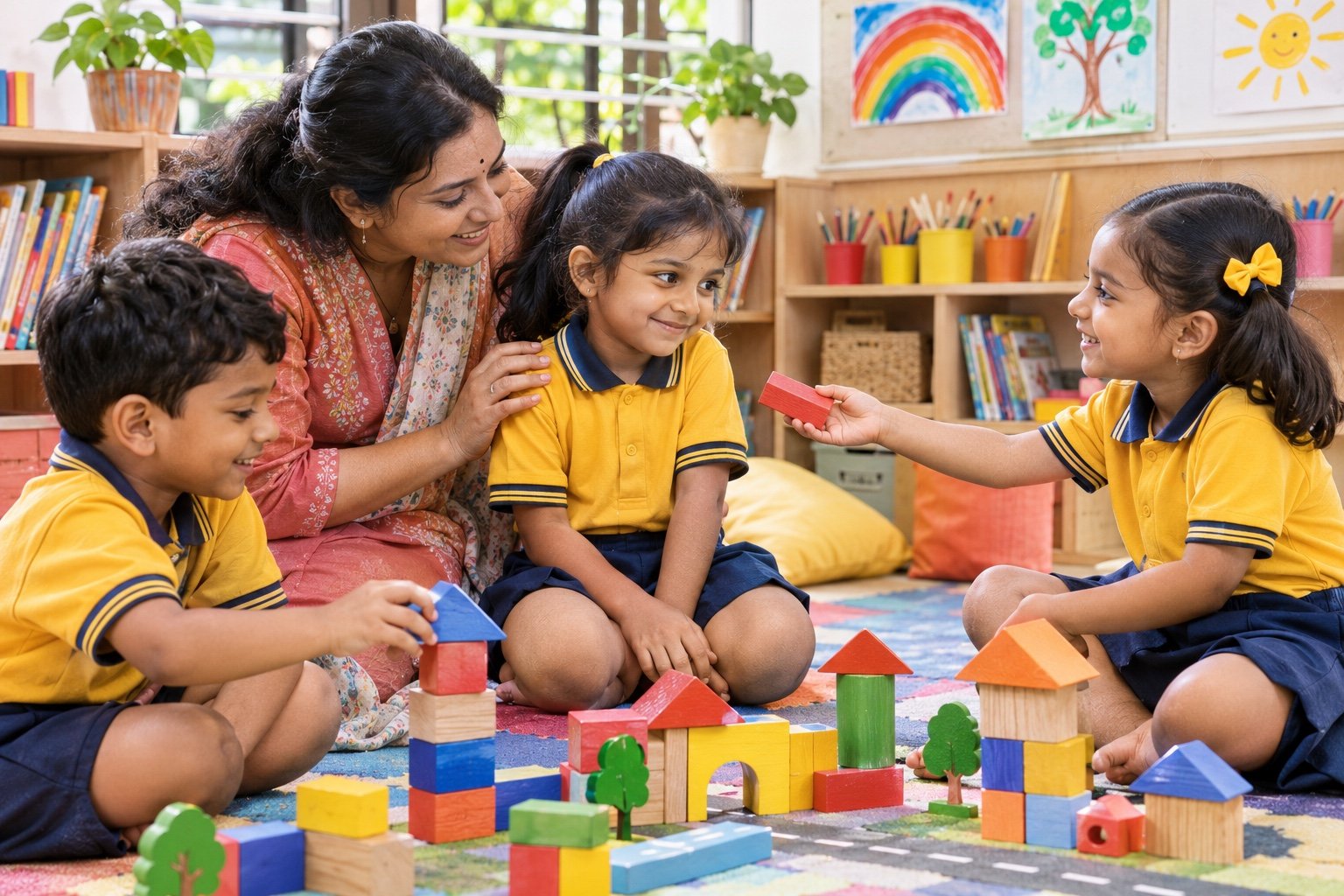
Three children may have assigned every pretend-play role. Your child needs a way to contribute rather than a demand to be included: “Can I be the doctor?” or “I can bring food to the shop.”
A favourite friend chose someone else
Help the child widen the circle: “Riya can play with Aanya today and still be your friend. Who else likes blocks?” Friendships do not require exclusive access.
The children wanted different games
“They won’t play with me” may mean “They would not play my dinosaur game.” Practise flexibility: join their game for a while, suggest a combined idea or choose another group.
The entry was too sudden
Grabbing a toy or changing the rules can lead to rejection. Teach the child to watch briefly, move near, comment on the play and offer a useful action.
There is repeated exclusion
When the same child or group repeatedly blocks, humiliates or encourages others to exclude your child, adults need to observe and intervene. Do not leave a preschooler to solve a persistent power pattern alone.
The “watch, move, offer” joining plan
- Watch: notice what the group is doing before entering.
- Move: come close enough to participate without crashing into materials.
- Offer: say or do something that fits: “Can I build a road?” or “Here is another plate for the restaurant.”
Practise with dolls, animals or blocks at home. Keep the rehearsal playful and short. Take turns being the child who joins and the child who says, “Not that game.” Teach a backup response: “Okay, I’ll ask someone else” or “Can I watch?”
Five friendship skills to practise through play
- Getting attention kindly: say a name or move into view instead of grabbing.
- Offering an idea: “Let’s make a bridge” rather than commanding roles.
- Accepting another idea: add one peer suggestion before changing the game.
- Taking turns with high-interest materials: use a visible timer or “my turn, then your turn”.
- Repairing: return the item, check if the other child is okay and try a safer action.
If turn-taking is the main difficulty, see our sharing and turn-taking guide. If hitting or biting occurs, safety comes before friendship coaching; use the plan in our gentle-hands guide.
How to talk with the teacher
Avoid asking only, “Does my child have friends?” Request observations across several days:
- Who does my child approach during free play?
- How do they try to join?
- How do other children respond?
- Does the pattern change by activity, noise level or time of day?
- What adult prompt helps without taking over?
- Is there repeated targeted exclusion, aggression or fear?
Agree on one small support for a week: pair the child with a compatible peer for a two-person job, give a role in an inviting activity or coach the exact entry phrase. Set a date to compare observations. NAEYC recommends direct conversation with teachers and a shared, specific solution.
What teachers can do without forcing friendship
A teacher can create small-group activities around shared interests, narrate successful entry—“Meera brought a block for the road”—and teach all children respectful ways to include or decline. They can also watch whether the environment favours only confident speakers or whether one popular toy produces repeated conflict.
Forcing two children to call each other “best friends” does not build a genuine relationship. The goal is access to safe, responsive play and several possible connections, not one assigned companion.
Should we arrange a playdate?
A short one-to-one meeting can make interaction easier than a large group. Ask the teacher which child shares an interest, then invite the family without describing either child as a solution to a problem. Choose a familiar activity with more than one set of materials, stay nearby and end while the children are still coping well.
Do not schedule a packed friendship campaign after one lonely Tuesday. A child also benefits from neighbours, cousins, park groups and community activities; confidence need not depend on one classroom relationship.
Shyness, language and sensory needs
A quiet child may prefer parallel play before conversation. A multilingual child may understand the game but need a rehearsed entry phrase. A child sensitive to noise may connect better at puzzles than in a busy pretend-play corner. Adapt the environment instead of treating every difference as poor social skill.
Use our confidence ladder for shy preschoolers for small, consent-based steps. If communication is difficult across languages or settings, share specific examples with the teacher and paediatrician.
When “no” is okay—and when exclusion is not
Children are allowed to protect a structure, take space or decline a particular game. Inclusion does not mean unlimited access to another child’s body or belongings. Teach both messages: “You may say no kindly” and “You may not repeatedly organise others to shame or isolate someone.”
Take reports of pushing, threats, unsafe touch or repeated targeted exclusion seriously. Stay calm, record the child’s words, ask the school to observe and follow its safeguarding process. Do not confront another preschooler or parent at the gate.
When to seek extra support
Ask for additional help when isolation continues across settings, distress is frequent, the child starts avoiding school, sleep or appetite changes, there is repeated aggression or exclusion, or communication, sensory or developmental differences make participation difficult. Begin with the teacher and paediatrician or a qualified child-development professional.
Support does not mean the child has failed at friendship. It means adults are making the social world more understandable and accessible while the child learns.
A one-week friendship experiment
- Listen and identify one specific play moment.
- Ask the teacher for observation, not a label.
- Choose one joining phrase.
- Role-play it once a day for two minutes.
- Let the teacher prompt it during a compatible activity.
- Notice any successful contact, even if brief.
- Review what helped and choose the next small step.
A preschooler does not need to be popular. They need repeated chances to experience: “I can approach, I can recover from a no, and there are adults who help everyone play safely.”
Quick parent FAQs
What should I say when my child says nobody plays with them?
Start with the feeling: “That sounds lonely. I’m glad you told me.” Then ask one neutral question about the specific moment. Avoid denying the story or blaming another child.
Should I contact the preschool teacher?
Yes when the concern repeats, causes distress or includes exclusion, aggression or fear. Ask for observations across several play periods and agree on one small support with a review date.
When does a friendship problem need extra support?
Seek help when isolation persists across settings, the child avoids school, there is repeated targeted exclusion or aggression, or communication, sensory or developmental differences make participation difficult.